Industrializing space. Rewilding Earth.
Essential industries are moving into deep space. The Extraterrestrial Company is the deep space infrastructure platform making it possible.
We originate new infrastructure projects beyond Earth orbit. We invest in the industrial clusters that supply them. And the surplus funds the largest privately endowed ecological restoration initiative in history.
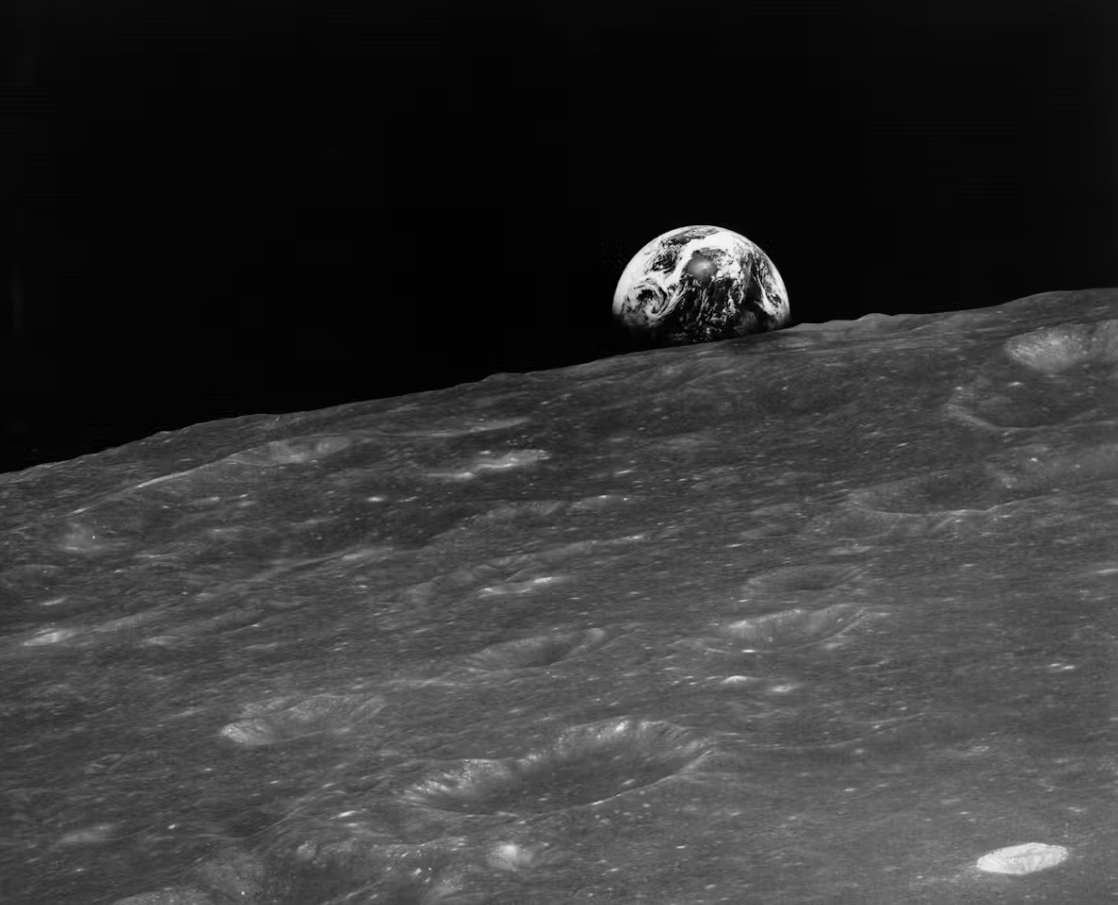
First photo of Earth from the Moon taken by Bill Anders of Apollo 8, much sharper than the historic (in color) Earthrise photograph taken just a moment later.
Three development verticals. One thesis.
The deep space economy requires the same foundation every industrial economy has required: power, data, communications, navigation, logistics, and the rule of law. We are building that foundation. In various Earth orbits, Lagrange points, on the Moon, Mars, and in the Asteroid Belt. Across three coordinated development verticals.
01 Industrializing
Developing and financing the enabling infrastructure assets of the deep space economy: nuclear and solar surface power, heliocentric sensing and communications networks, positioning, navigation and timing constellations serving key celestial bodies, deep space computing and edge inference, and the Moonport, Marsport and Asteroidport multimodal logistics nodes that connect them. Infrastructure first. Everything else follows.
02 Mining
Prospecting, exploring, permitting and building the first commercially viable lunar mines, initially targeting helium-3 at three prime oceanus and mare sites. And then the full spectrum of space resources, including water ice, volatile gasses, platinum group metals, and rare earths. Across the Moon, Mars, and the Asteroid Belt. The apex commercial activity of the deep space economy.
03 Colonizing
Developing and building the first privately financed human-crewed bases, beginning at the lunar south pole near the Rim of Eternal Light. Adjacent to water ice in permanently shadowed regions of Shackleton, Cabeus and Haworth craters. Powered by near-continuous solar, combined with fission-based nuclear reactors. Built to operate, not to visit.

Mosaic image of Bennu after two years of observation by OSIRIS-REx mission that made contact and retrieved a sample of regolith on 8 September 2016
Creating dedicated industrial clusters in the deep space supply chain.
The Extraterrestrial Company invests in strategically vital deep space technology companies. With proven flight heritage, world-class technical capabilities, often capital-starved and government contracts dependent. We provide the commercial demand anchor, the institutional capital, and the industrial coordination they cannot find elsewhere.
Our targets are Series C and later-stage companies operating beyond the gravitational sovereignty of Earth, across deep space sensing and computing, power, communications, navigation, multi-modal logistics and in-situ resource utilization (ISRU). We consolidate fragmented suppliers into a standards-driven, demand-secured industrial ecosystem. The result is an industrial group of deep space companies that generates durable and increasing returns to scale — across civil, defence, and commercial space domains.
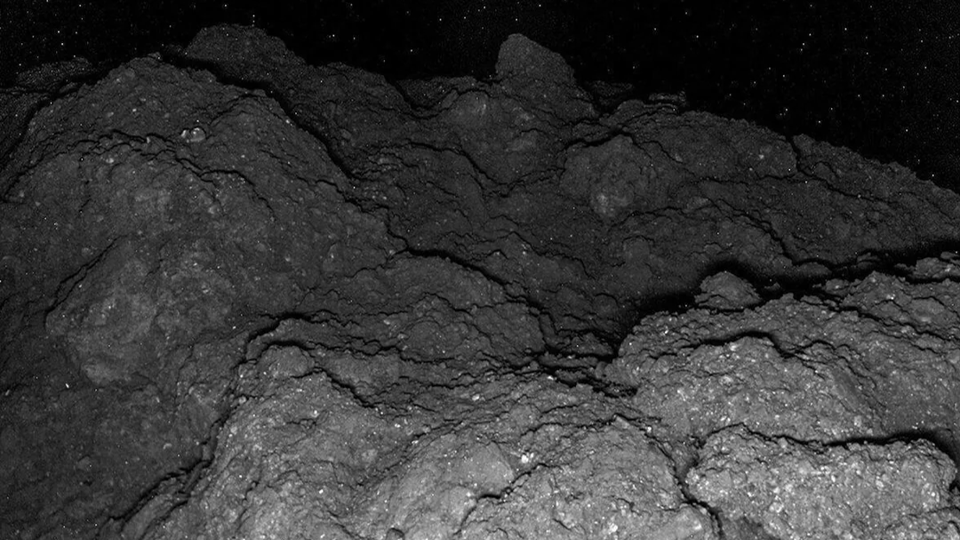
Closeup image of Bennu by NASA OSIRIS-REx mission in 2016
Built by the people who know what it takes.

Glen Martin
Chief Executive Officer
Glen Martin has spent more than forty years building infrastructure at the intersection of space, energy, and industrial technology. He began his career contributing to International Space Station as a design engineer at McDonnell Douglas Space Systems Company and has since founded and financed companies across satellite communications, green hydrogen, intelligent microgrids, and large-scale solar deployment in Asia and the Americas. His work on lunar resource development — including helium-3 extraction and foundational lunar energy systems — has positioned The Extraterrestrial Company at the frontier of the deep space economy. He holds a Bachelor of Technology (BTech) in Aerospace Engineering from Toronto Metropolitan University (nee Ryerson Institute of Technology) and an Master of Business Administration (MBA) from the University of Southern California.

Jacques Demers
Chairman
Jacques Demers brings forty-five years of legal and investment expertise to The Extraterrestrial Company, with a career that has shaped how institutional capital moves across borders and asset classes. As President and CEO of OMERS Strategic Investments from 2008 to 2015, he managed $3.5 billion in assets and led the creation of the $12.6 billion Global Strategic Investment Alliance — a landmark framework for co-investment between Canadian, Japanese, and international pension funds. He co-founded AGAWA Partners in 2015, focusing on sustainable infrastructure in oceans, water, and agri-food. Jacques holds a law degree from Université Laval and studied economics, history, and philosophy at McGill University. He brings the LP relationships, institutional credibility, and cross-border governance expertise that The Extraterrestrial Company capital programme demands.
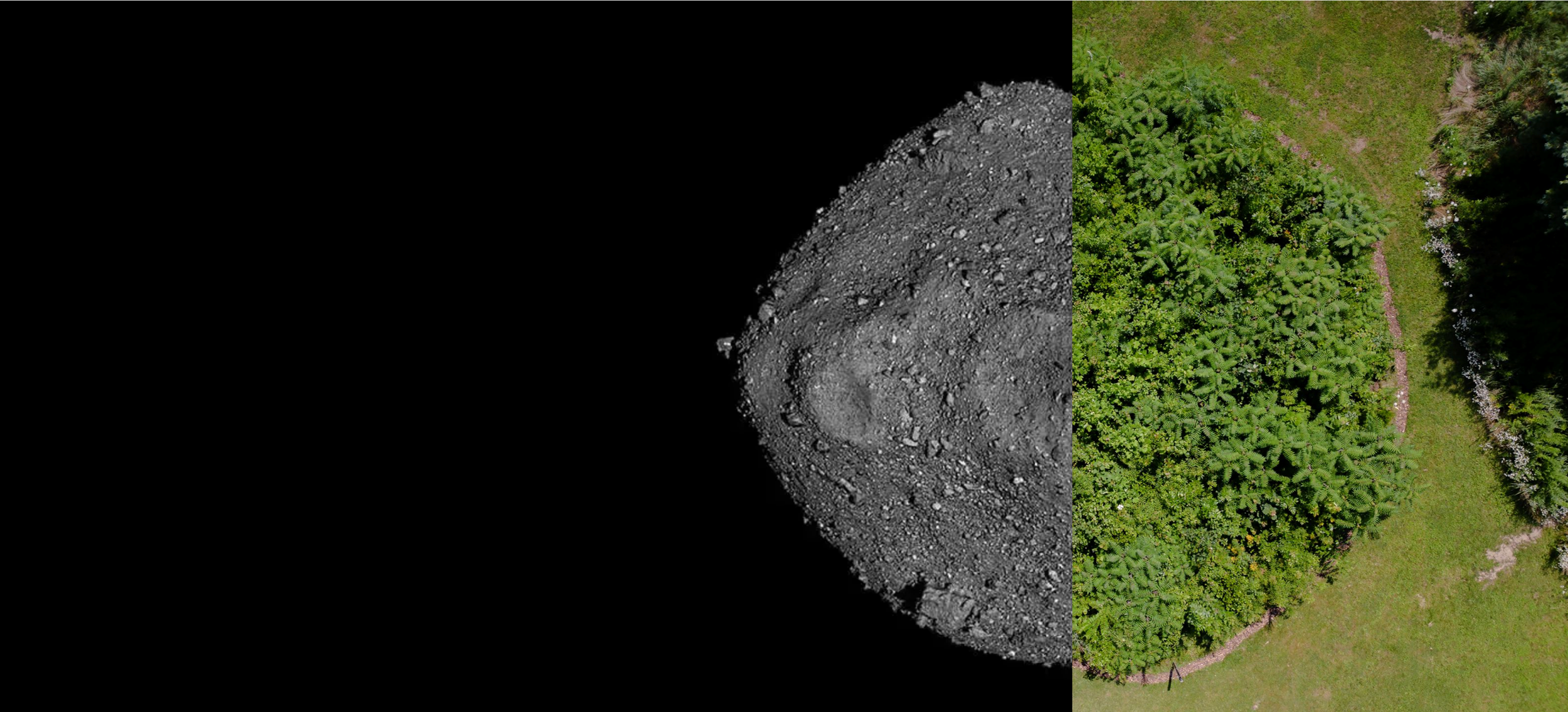
The surplus of the deep space economy, returned to the Earth.
The Extraterrestrial Rewilding Trust is a permanent endowment, structurally embedded in The Extraterrestrial Company and funded from operational surplus beyond targeted investor returns. It is more than a philanthropic programme, it is the long arc of the commercial thesis: the deep space economy generates abundance; that abundance restores the planet.
The Trust funds Miyawaki reforestation and afforestation, wetland and riverine corridor reconstruction, ocean rewilding, including kelp forests, seagrass restoration, and Indigenous-led land initiatives globally. It supports rewilding science and conservation leadership. And it creates large-scale employment for workers displaced by cognitive AI and robotics, turning the most disruptive technological transition in history into a force for planetary renewal.
As so comprehensively and beautifully articulated in the Astra Carta — announced in 2023 by His Majesty King Charles III — we share a commitment to the responsible and sustainable use of outer space, and the mission to preserve and protect our origins on Earth. The Extraterrestrial Rewilding Trust is also inspired and aligned with the sustainable development goals (SDG) of the United Nations Office of Outer Space Affairs (UNOOSA) as championed by Professor Brian Cox, the Earth/Percent mission of the inimitable Brian Eno, and Brian May’s Starmus Festival promotion of science education and awareness of the space domain through the Venn diagram intersection of the Earth, Space and Culture.